
BareTierra
Baretierra no es una tienda. Es una guía independiente: cuando haces clic en un producto te llevamos a la tienda oficial, con el mismo precio y compra segura.
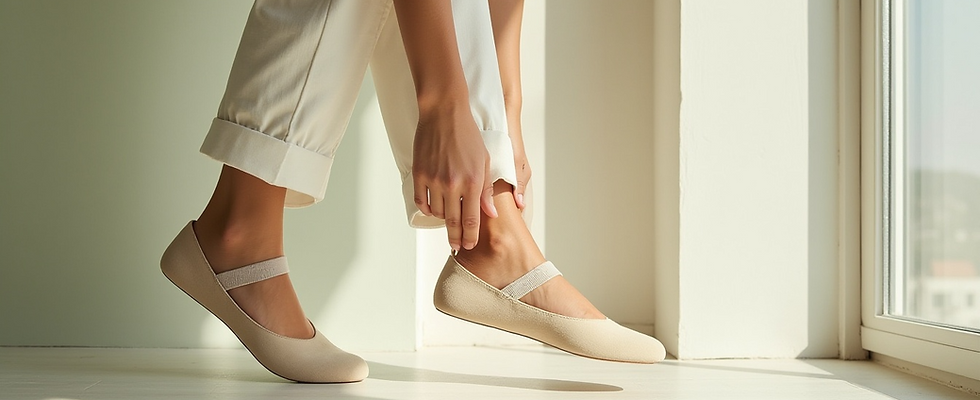
Table of contents
What is the barefoot transition? How to go from "cushioned" footwear to strong feet.
Should I consider barefoot swimming? Take the mini-check and find out how to get started.
Recommended models (to start today) 2-3 easy and secure pairs: zero doubt, click and go. ⭐
Transition vs. pure barefoot: the key differences. Last, drop, and flex: the minimum you should look for in a shoe.
Benefits you'll notice. Balance, strength, and posture: your feet will thank you.
Typical discomforts and how to avoid them. What might hurt at the beginning and how to reduce the risk.
Starter plan: 6 weeks. Simple guide with realistic progression and rest days.
Quick exercise (2 minutes). Activate your fingers and arch before going out: start now.
Scientific evidence. What the research says: links and key studies.
Is barefoot for you?
Learn what transition is, why it can strengthen your feet, and how to avoid common discomfort.
If you answer “yes” to two of these three questions… — stiffness at the end of the day, desire to improve posture, 10 minutes off — this 6-week plan is your starting point.
1. What is the transition to barefoot footwear?
The transition is a period of gradual adaptation that allows your plantar muscles and tendons to get used to a thin, flexible sole. Suddenly switching from a cushioned shoe to a minimalist shoe can cause strain on your calves and fascia, just like trying to run a marathon without training.
Key fact : Intrinsic foot strength can increase by 57% ¹ with just 6 months of progressive use of minimalist footwear.
[ Learn more ]
2. Should I consider going barefoot?
Many women tell us that at the end of the day they feel less pressure on their feet, more balance, and a clearer mind. Small steps, big changes.
-
Do you feel tired or stiff in your feet at the end of the day?
-
Looking to improve balance and posture without complicated routines?
-
Are you willing to dedicate at least 10 minutes a day for 6 weeks?
2–3 “yes”: barefoot may be for you.
1 “yes”: Start with barefoot exercises only; decide later.
Consult a professional if you have a serious medical condition, a pacemaker, or are pregnant.
You don't need to be an athlete or have free time. Just pay a little attention to yourself and your feet.
6. Recommended products
To accompany your transition, these are our favorites :
Mustang Free Aria

Unboxing Mustang Free Aria: plantillas de transición

Unboxing Mustang Free Aria: dos plantillas para tu transición

Mustang Free Aria: sensación de suelo medio-blando.
Unboxing Mustang Free Aria: plantillas de transición
Models (choose the one you prefer):
Walk freely with Free Aria. Designed in collaboration with sports traumatologist Dr. Juanjo López to respect the natural development of the foot.
✅ Result : less pressure on the forefoot, a more neutral posture, and a clean look that fits from the office to after-work.
-
Wide, stitched toe : the toes are expanded and the stitching reinforces the area where the fabric is most stressed.
-
Flat (zero-drop) and very flexible sole ; 5 mm thick for a smooth feel on the ground.
-
Transition insole included : Adds a few millimeters of cushioning while your fascia and calves strengthen; when your body is ready, simply remove it.
-
INESCOP vegan certification : no animal-derived materials.
📏 Sizing Guide : Measure your bare foot at the end of the day and allow +5mm of slack; see chart here .
🪡 Made in Spain.
💡 Tip : If you're wearing heels or high heels, start with a half-day for the first two weeks and follow each day with 3 minutes of ankle mobility and toe yoga. Your feet will thank you.
As an Amazon Associate I earn from qualifying purchases.
Barebarics Vaporo All White


Barebarics Vaporo All White


The Recovery shoes are a middle ground between conventional footwear and transitional footwear. They're ideal for beginners, as the thin soles provide extra cushioning. The sole has a slight heel-to-toe incline (not a traditional heel counter) that helps ease the transition to barefoot walking without any abrupt changes in gait.
Barebarics Vaporo All White


Barefoot leather shoe with a wide last and flexible sole, designed for everyday wear. It comes with two insoles: a flat one for a minimalist stride and an adaptive one with Memory Foam that adds extra cushioning at the toe. Ideal for the city or office thanks to its clean look and the comfort offered by the soft leather.
Barebarics Vaporo All White


Models (choose the one you prefer):
Start with the cushioned insole for a slight heel lift; once you adapt, switch to the flat insole for a barefoot feel. At Sunni Sabbi, the women's model is slightly narrower (more snug in the heel and instep) while the men's offers more room (wider instep and forefoot). The internal length is the same for the same size.
Mustang Free Aria


Walk freely with Free Aria. Designed in collaboration with sports traumatologist Dr. Juanjo López to respect the natural development of the foot.
✅ Result : less pressure on the forefoot, a more neutral posture, and a clean look that fits from the office to after-work.
-
Wide, stitched toe : the toes are expanded and the stitching reinforces the area where the fabric is most stressed.
-
Flat (zero-drop) and very flexible sole ; 5 mm thick for a smooth feel on the ground.
-
Transition insole included : Adds a few millimeters of cushioning while your fascia and calves strengthen; when your body is ready, simply remove it.
-
INESCOP vegan certification : no animal-derived materials.
📏 Sizing Guide : Measure your bare foot at the end of the day and allow +5mm of slack; see chart here .
🪡 Made in Spain.
💡 Tip : If you're wearing heels or high heels, start with a half-day for the first two weeks and follow each day with 3 minutes of ankle mobility and toe yoga. Your feet will thank you.
As an Amazon Associate I earn from qualifying purchases.
3. Characteristics of transition and barefoot footwear
Here's a comparison of key features between transitional shoes (minimalist with some cushioning) and barefoot shoes (as close to barefoot as possible):
Characteristics of transition footwear
-
Sole thickness: 4 – 8 mm (some cushioning)
-
Heel-toe height drop: 0 – 4 mm (slight drop)
-
Flexibility: very flexible, but with some structure
-
Protection: basic against stones and mud
-
Last: tight (although somewhat wider than a conventional shoe)
-
Cushioning: light
-
Weight: 180 – 240 g per shoe
-
Ground feel: soft, with some cushioning
-
Recommended use: daily walking in urban environment, first transition steps
Features of barefoot footwear
-
Sole thickness: 0 – 4 mm (almost no cushioning)
-
Heel-toe height drop: 0 mm (heel and toe at the same level)
-
Flexibility: maximum multidirectional
-
Protection: minimal; prioritizes ground feedback
-
Last: very wide (EE – EEE), free toes
-
Cushioning: almost non-existent; “direct floor” feeling
-
Weight: 140 – 200 g per shoe
-
Ground feel: direct, maximum proprioception and connection with the ground
-
Recommended use: already adapted users, “natural running” on varied terrain
(*) Wide fit (W-W) in footwear refers to a design that provides more room in the front of the shoe, especially in the toe box and forefoot. It's ideal for people with wide, swollen feet , or those who prefer more room for comfort.
Which one to choose?
Transition : Perfect if you've never worn barefoot shoes before and want a soft "bridge." They allow you to gradually increase your daily load and remain protected on hard surfaces.
Barefoot : Ideal for those who already have minimally strengthened feet and ankles. You're looking for maximum proprioception, gait correction, and a barefoot feel outdoors.
Want to know more?
If you'd like to delve deeper into barefoot and grounding, I've prepared a selection of 7 essential books to accompany you in the transition.
4. Benefits (in plain language)
Possible benefits
These benefits are gradual and depend on a slow transition (adding 10% of time weekly) and specific strengthening exercises.
1. You feel the ground better and strengthen your feet ¹
By using a thinner sole, your feet "wake up": you feel every touch of your foot, and your arch muscles start working. It's the foundation upon which all other positive changes are built.
2. You start safely and with less risk of injury
Transition shoes have a little cushioning. This cushioning protects your calves and heels while you learn the new way of walking, so you don't hurt yourself in the first few weeks. Ideal as a bridge for people with pre-existing fasciitis or who are overweight.
3. You regain mobility in your ankles and arch
Without a raised heel, your ankle can move freely, and the arch of your foot stretches and flexes with each step. This distributes the load better and takes the strain off your knees and hips .
4. Improve your posture and relieve your lower back pain ²
When your foot is well supported and your heel isn't "high," the rest of your body aligns naturally: your pelvis and lower back are under less strain , and you feel more upright.
5. Better dynamic balance and reflexes
The increased tactile feedback activates proprioceptive receptors in the sole and ankle, helping to correct stride on uneven surfaces and reducing sprains .
6. Stimulation of circulation and thermoregulation
Active footwork and freedom for the toes promote venous return and maintain a more stable temperature; less cold feet and less tingling after long days .
7. Reduction of calluses and chafing
By widening the toe box and distributing the forces, the friction points that are common with narrow shoes disappear.
5. Common discomforts and how to solve them calmly
When you first start, it's normal to experience new sensations: tightness in your calves, a straining arch, and fingers that stretch more than usual. Here we explain what's normal and what to do if any of them bother you.
1. Overload of calves and Achilles ³
Symptom: pain when stepping, feeling of tension.
Action: Reduce the duration by 20% the following week; add gentle stretching and apply ice after the session.
2. Plantar fasciitis
Symptom: Pain in the arch when you wake up in the morning.
Action: Roll your foot on a cold bottle, wear fascia knee pads, and rest for a day before continuing.
3. Stress fracture
Symptom: localized and persistent pain.
Action: In rare cases this may be a sign of overload.
If you experience stabbing pain that doesn't improve, stop for a few days and consult a professional.
If any discomfort does not improve within 2–3 days, return to the previous phase or seek advice from a podiatrist.
7. Your first barefoot experience: 6 weeks
This small daily ritual not only strengthens your feet. Many women find it also improves their mood, their posture at the computer, and even their gait.
What if 10 minutes a day could change how you feel from head to toe? This isn't just another challenge. It's a daily gesture of reconnecting with yourself.
Week 1-2 : barefoot at home + toe yoga, 10-15 min.
Sensation: pain 0-2 /10.
Week 3 : Minimalists on a plain outdoor surface, 500 steps.
Sensation: tense calves = normal.
Week 4 : +10% time; introduce grass, 15-20 min.
Sensation: pain free 48 h
Week 5 : full-time minimalist interior, full day.
Sensation: active plantar arch.
Week 6 : outdoors 60% of the day, ≥30 min.
Feels like compacted earth.
PDF Tracking Template [ Download ]
8. Express exercise (60 s)
1. Sit down and take off your shoes.
2. Separate each finger in a “V”, hold for 2 seconds, relax.
✔︎ 10 repetitions.
Quick challenge: do it while your coffee is brewing.
9. Mini-FAQ
Do your calves hurt at first? Mild discomfort is normal; if it lasts longer than 48 hours, you'll go back one phase.
Can I run with them now? Wait until you've completed 6 weeks of pain-free running before starting to jog.
Which socks should you wear? Thin, seamless ones; they avoid extra compression.
More questions? [ Complete FAQ ]
10. Scientific evidence